
 It has been postulated estrogen is a woman’s key hormone, and estrogen decline has been the primary area of focus for researching women experiencing the menopausal transition; however emerging data supports the greater role androgens, primarily testosterone, play in neuropsychology, and demands further exploration and study. Androgen receptors are found on virtually every cell in the female human body, indicating the role they play in normal tissue homeostasis. When testosterone is deficient, the risk of pathologies including breast cancer, osteoporosis and cognitive decline may increase. Androgen deficiency results in several variables that have an impact on health related quality of life (HRQOL), and a woman’s response to symptoms can have deleterious effects ranging from physiological, psychological, biosocial and behavioral outcomes. Some of these symptoms may include, but are not limited to, sleep deprivation, mood swings, depression, anxiety, brain fog, difficulty focusing, and memory loss; night sweats, weight gain, low libido, and extreme fatigue.
Despite the plethora of data to support androgen replacement in women globally, and the fact that it has been used safely in women for almost a century, as of 2013, and currently, there are no testosterone only products licensed by the FDA for use in women in the U.S. There is little consensus across National Guidelines regarding hormone replacement therapies, and confusion around the results of the WHI have left many providers with more questions than answers when it comes to managing their female patients during this time.
As there are no FDA approved testosterone products for women on the market, many practitioners are not educated about the role of this vital hormone in women; further, many practitioners have reported they were unaware women even made testosterone, much less needed it for optimal functioning. Healthcare providers report there is data lacking in our most popular peer reviewed medical journals regarding hormone decline and as it relates to HRQOL, as well as the short and long-term safety and efficacy of androgen replacement methodologies.
In actuality, there are hundreds of research articles that speak to the positive role androgens play in the areas of psychological, neurological, cardiac, gynecological and urological functioning, as well as the musculoskeletal and metabolic systems. Studies abound regarding the roles androgen hormones play in all body systems and disease processes, as well as the safety and efficacy of androgen replacement modalities; they are simply not easily accessible in the common peer reviewed journals to which most practitioners prescribe.
Significance
The peri-menopausal and post-menopausal stage of a woman’s life has been reported as the most devastating regarding symptoms and the impact of symptoms on overall functioning and quality of life. Further, as many healthcare providers are unaware of the connection, hormone fluctuations are often overlooked as a cause of their female patients nonspecific symptoms of mood alterations, fatigue and sleeplessness; she is often diagnosed as “too stressed” and either clinically ignored and told to rest and exercise, or given a prescription for an antidepressant, sleeping pill or anxiety pill to band-aide her symptoms. An astute provider may suggest a trial of estrogen hormone, but often this only accomplishes partial relief of symptoms, and only if the patient is clinically deficient in estrogen.

Androgen replacement has been shown in women and men to improve mood, lift anxiety and depression, improve deep sleep patterns, and enhance sexuality, all of which improve HRQOL (Bachmann, 1999; Barret-Conner, et. al., 2008; Carnahan & Perry, 2004; Davis, et. al., 2001; Davis, 1999; Ebinger, et. al., 2009; Glaser, et.al., 2010; Nappi & Lachowsky, 2009; Sands & Studd, 1995; Studd & Panay, 2004).
In addition to improving overall sense of well-being, energy levels, libido and quality of life, hormone therapies have been shown to prevent osteoporosis, increase muscle mass, increase muscle strength, increase bone density, reduce visceral fat, reduce total cholesterol levels, induce glucose homeostasis, increase metabolism, manage PMS, reducing severity and frequency of migraine headaches, improved cognition, improved memory, prevent Alzheimer’s disease, improve Parkinson’s symptoms, treat HIV wasting syndrome, in women and men; and decrease in CVD risk and all cause mortality in men (Aminorroaya, et. al., 2005; Amory, et. al., 2004; Araujo, et. al., 2011; Bachmann, 1999; Beauchet, 2006; Bialek, et. al., 2004; Boyanov, et. al., 2003; Cherrier, et. al., 2001; Davis, 1999; Davis & Tran, 2001; Davison, et. al., 2011; Glaser, et. al., 2012; Hammond, et. al., 2001; Isidori, et. al., 2005; Okun, 2006; Pike, et. al., 2009, van Geel, 2009, Vanderschueren, et. al., 2004).
Misrepresentation of study outcomes in the media and in the Women’s Health Initiative Trial of 2002 has constructed breast cancer as a woman’s biggest fear with regards to HRT. Expansive literature review shows testosterone not only improves overall quality of life, but also to be protective and preventative for breast cancer (Dimitrakakis, et. al., 2003; Dimitrakakis, et. al., 2004; Dimitrakakis, et. al., 2009; Dimitrakakis, 2011; Eigeliene, et. al., 2012; Glaser, et. al., 2010; Hofling, et. al., 2007; Somboonporn & Davis, 2004; Somboonporn & Davis, 2005). Further, studies show use of testosterone replacement therapy in women does not increase the risk of breast cancer, even in breast cancer survivors (DiSaia, et. al., 1996; Durna, et. al., 2002; Durna, et. al., 2004). 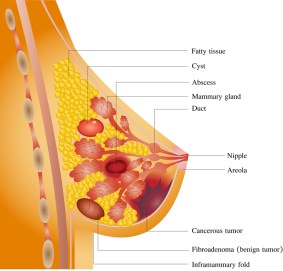
Most haunting in the literature review were the studies from a half a century ago that revealed testosterone therapy in women with metastatic breast disease showed not only remission of the cancer but a marked improvement in quality of life (Authors Unknown, 1946; Goldenberg, 1964; Kautz & DeNosaquo, 1960; Loesner, 1954). Posing the question of why aren’t these modalities more utilized today knowing the proven beneficial effects?
 Androgen Hormone Therapy for Women