
 Objectives
The goal of the “Raise Awareness” Androgen Hormone Therapy for Women ePortfolio is to expand healthcare provider awareness of hormone imbalance from identification, to diagnosis, to evidence based treatment options for women experiencing the often-debilitating effects of hormone decline throughout the mid to late reproductive years and into the post reproductive years. Initially, this will be accomplished by narrowing down the focus to educating family and women’s health Nurse Practitioners about peri and postmenopausal women experiencing depression, anxiety and altered mood states.
The short-term objective will be to simply raise awareness via the ePortfolio about the role hormones, especially androgens, play in the vague symptom presentation women 35 and older may present with. Utilizing a validated tool, such as the menopausal rating scale (MRS) questionnaire to open dialogue with patients will be a simple conversation starter practitioners could download from the ePortfolio and begin to use immediately in their practices.
mrs-assessment-scale
In order to impact a vast number of patients across the country with these evidence-based modalities, an education and eTraining platform is of vital importance, and this is the focus of our long-term objective. There is much to be learned in advanced hormone replacement therapy, and medical practitioners need a place to be presented with this additional education in a format that combines evidence based didactic lectures with interactive, virtual hands on clinical experience in the form of case studies and patient demonstrations via live stream audio/video platforms. Ongoing continuing education in the form of webinars and refresher courses are paramount as the studies around this highly debated topic are in constant flux. Ancillary staff is the frontline to most communication with clinic patients; therefore they too should be educated in these formats with regards to basics of the HRT modalities, as well as process and flow implementation of HRT methodologies in the respective clinics.
 Organizational Structure / Needs Assessment
As much of the legwork regarding the research and education to create eLearning modules has been done, the primary resources needed will be for online platform designers and IT support. Marketing teams and resources geared towards recruiting practitioners to engage in a needs assessment and potentially invest in the advanced training will also be necessary. Collateral marketing materials geared towards healthcare providers will need to be created and a medical writer to assist in ongoing content creation for continuing education will be considered.
Projected Timeline
The projected timeline for launch of the first phase of the project, the “Raise Awareness” phase will be complete and ready to launch over the next 90 days. The long-term goal of the online education and eTraining platform is projected to span approximately 12 months. As I have already been intimately involved in the creation of a live training platform, as well as opening a research and training facility focused on advanced hormone replacement therapy via subcutaneous pellet implants, much of the legwork for the evidence based didactic and module creation has been complete, utilized and validated via the training of hundreds of practitioners over the course of 4 years.
Budgetary Considerations
Various budgeting methodologies are commonly utilized in projection of both financial expenditures and return on investment (ROI) as those apply to this type of specialized online training project. Initially, the vast majority of costs will be for online platform development and marketing collateral development. Subsequently, marketing campaigns will comprise the bulk of the budgetary considerations. The most current guide to estimating cost of developing an online platform is estimating the time it takes to develop one hour of training. According the table of time estimates in a research article referenced by Cobb “an hour of e-learning featuring moderate interactivity and limited animations requires anywhere from 90 to 240 hours to develop; assuming an average hourly labor cost of $65, you wind up with a cost of $5,850 to $15,600″ (n.d.).
The average amount of time spent educating new practitioners on a live platform was approximately 10-15 hours, taking that same amount of content and translating to eLearning would be a good place to start for budget estimates. The Cobb article reported the average cost to be somewhere in the middle range, approximately 10,000 for one hour of moderate activity content creation. Creating a prototype on a smaller scale with limited activity and animations could reduce this cost.
The ROI will build over time as recruited practitioners pay an initial, yet to be determined, fee for the online education and eTraining, and a monthly membership fee to remain up to date and be included in ongoing continuing education, blog and peer social media platforms.
Plan for Evaluation
Critical importance exists for development and implementation of an ongoing eTraining platform evaluation plan. Through implementation of formative evaluation measures, program personnel will be able to to rapidly identify problems or potential problems. For example, data will be provided that relate to the degree to which the newly trained practitioners feel prepared to implement the therapy into their practices, patient care, follow up, clinic flow as it relates to implementation of the new modalities by the trained providers and their ancillary staff. At 30 days post training, a short formal survey will be sent electronically to both providers and ancillary staff for feedback and process improvement of the training itself as well as additional needs not covered in initial training modules. One of the first surveys to create would be to prior practitioners that were trained on the original live training platform created and utilized from 2012-2015. What I would be looking for is missing pieces that the providers would have appreciated now that they have been utilizing the hormone treatment modalities in their practices for several years.
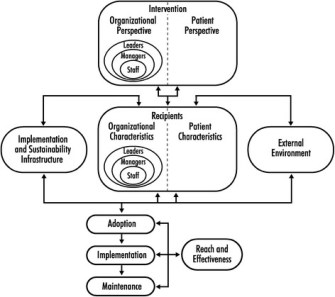 Measuring sustainability of the eTraining platform would be carried out using the Practical, Robust, Implementation and Sustainability (PRISM) model. The PRISM model is a tool for researchers and medical decision makers to translate research into practice that evaluates how the program, in this case initially the “Raise Awareness” phase, and subsequently the online education and eTraining platform, interacts in the practices with regards to adoption, implementation, maintenance, reach and effectiveness (Feldstein & Glasgow, 2008). Information obtained using this model will be vital to evaluating overall program effectiveness from start to finish: from the marketing efforts of prospecting new practitioners, to the didactic lectures for practitioners, MA’s, office managers and front office staff, to the virtual hands on clinic training and back into follow up regarding implementing the newly learned concepts and methods into clinical practice.
Ethical Considerations
Of primary concern are the future patients that will receive the newly implemented therapies from their healthcare providers. Considering androgen therapy in women is still considered off label in the US, educating practitioners regarding the importance of educating their patients and informed consent will need to be a part of the training modules. Education and privacy of patients recruited for the virtual “hands on” portion of the training, as well as any testimonials or photography used in marketing collateral will be of paramount importance.
 Androgen Hormone Therapy for Women