
Exploration Meeting CEO Qapsula
January 19, 2018
This meeting was spent with the CEO and lead developer of an interactive app for enhanced communication between patients and providers called Qapsula. He shared his barriers and challenges in getting the app to the marketplace and actually had a host of questions for me as a health provider to help him better serve his future clients.
Qapsula uses an algorithm for virtually managing patients with various diseases which allows for controlling the treatment regime more effectively. A provider can upload patient recommendations to the system, then using these recommendations, the app creates a personal tracker that will make it easier for the patient to follow the course of treatment.
Benefits of the app:
- Become a part of a new revolutionary approach to medical care
The telemedical system and the possibilities of modern technology will allow you to improve the level of efficiency of your work in healthcare. Helping more people feel better and live longer comes as the result of our remarkably strong resources. - Find more patients to treat and help
You will have the opportunity to help many patients online in your virtual practice, which means that you can increase and complement your real-world practice. This is possible due to your Qapsula virtual reception area where it is easy to hold video consultations, answer patient’s questions online and monitor their conditions to achieve greater results in the treatment. Databases on Qapsula also provide you access to new patients all over the country. - Use time more efficiently
The opportunity to send you lab results, documents, photos and test parameters in advance of an office visit will help you treat patients in less time as well as save time for more patients. In addition, keeping in touch with patients remotely, monitoring their conditions and giving advice will help to make your working time more flexible. - Increase income through paid consultations
We offer payment to our doctors for consultations which they’ve completed using Qapsula’s system. If the patient wants to receive future consultations, it can be done on a paid basis in your office/clinic, increasing income and treatment outcome.
Example of what the interactive app may look like:
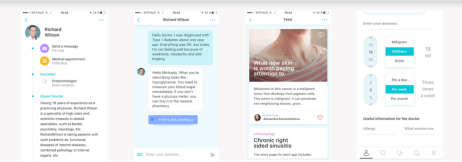
Retrieved from https://www.qapsula.com/for-doctors
I would recommend investigation of this company to any colleague looking to integrate tele-medicine into their clinical practice. Although this project did not directly relate to my DNP project, the knowledge of this type of technology will be useful for future expansion in the tele-medicine arena.
From a DNP perspective, this training meets the DNP Essential IV: Information Systems/Technology and Patient Care Technology for the Improvement and Transformation of Health Care& Essential VI Interprofessional Collaboration for Improving Patient and Population Health Outcomes.
TNP 2019 Conference Abstract Creation and Submission
January 22, 2018
The intention of this activity for me was to submit to promote my doctoral work through Texas Nurse Practitioner Conference in 2019. The morning was spent taking my DNP manuscript and creating a presentation format with objectives and measureable goals. The submission was completed and submitted by February 1st, and approved on April 3rd. The 30th Annual Texas Nurse Practitioners Fall Conference.
I have presented in the past for TNP and other annual APRN conferences, and the experience is invaluable. I highly recommend all DNP to share their knowledge with their peers in this way.
From a DNP perspective, this research and development of content with subsequent presentation meet the DNP Essentials: I. Scientific Underpinnings for Practice; III. Clinical Scholarship and Analytical Methods for Evidenced-Based Practice; VII. Clinical Prevention and Population Health for Improving the Nation’s Health; and VIII. Advanced Nursing Practice.
FemTouch FDA approved CO2 laser for feminine health training
January 31, 2018
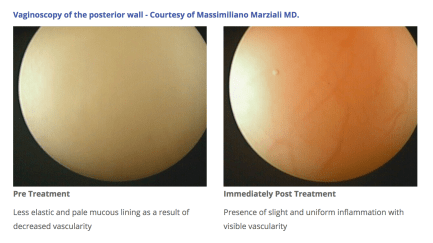
FemTouch is a CO2 laser technology addressing common vaginal health concerns such as stress urinary incontinence (SUI), vaginal pain, laxity and libido, to name a few. FemTouch promotes the stimulation of new vaginal tissue growth by triggering collagen production. This day was spent in a group setting with other healthcare practitioners and ancillary staff. Uro/gynecological age-related changes were discussed as well as various treatment options for conditions associated with age, menopause, birth trauma and the like. C02 fractional laser technology was compared to other modalities for safety and efficacy. I would recommend this technology to anyone interested in alternative or non-pharmacological treatments for SUI.
Below are histological and fluoroscopic examples of vaginal changes retrieved from: https://www.lumenis.com/Solutions/Aesthetic/Products/FemTouch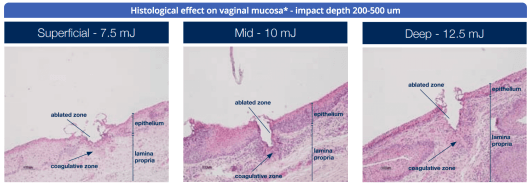
From a DNP perspective, this training meets the DNP Essential I: Scientific Underpinnings for Practice; Essential VI: Interprofessional Collaboration for Improving Patient and Population Health Outcomes; Essential VIII: Advanced Nursing Practice
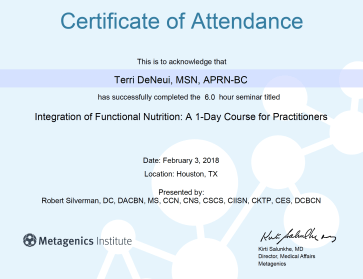
Integration of Functional Nutrition: A 1-day course for Practitioners.
February 3, 2018.
This all-day course was extremely beneficial for me as our clinics are moving more towards the functional and integrative approach to disease prevention. Functional nutrition is the foundation stone of integrative medicine. The complex, chronic health issues of the twenty-first century need a holistic nutritional approach that looks at genetic, environmental, and lifestyle factors and provides a systems-based framework for treatment.
Functional nutrition is particularly helpful for improving patient outcomes in diabetes, obesity, the metabolic syndrome, chronic fatigue, neurodegeneration, bone health, and cardiac health.
The fundamental concepts behind functional nutrition can be mastered in an intensive weekend seminar that also teaches healthcare professionals how to identify and manage common issues using an integrative medicine approach. In addition to learning the basics, participants will also learn how science-based nutritional products fit into therapeutic protocols that work. Join Dr. Robert G. Silverman for an eight-hour, one-day course that teaches the fundamentals of functional nutrition through a leading-edge, streamlined, implementable system that will provide you with actionable steps.
The objectives of this course were:
- Set up a new healthcare practice or integrate functional nutrition into their existing practice
- Integrate simple tools to probe beyond diagnosis and treat root causes effectively
- Understand the environment within and how the gut microbiome influences metabolism , body composition , and diabetes incidence
- Use functional nutrition therapies to support detoxification processes
- Use breakthrough functional nutrition therapies to resolve inflammation
- Use nutritional strategies to manage cardiometabolic concerns–basic protocols, flow charts, clinical pearls, and case studies make this course particularly valuable for healthcare professionals new to the functional nutrition approach and eager to expand their clinical knowledge
Retrieved from:
https://www.metagenics.com/integration-of-functional-nutrition-2018-02-03
From a DNP perspective, this training meets the DNP Essentials: I. Scientific Underpinnings for Practice; III. Clinical Scholarship and Analytical Methods for Evidence-Based Practice; IV. Information Systems/Technology and Patient Care Technology for the Improvement and Transformation of Health Care.
Literature review and content development for presentation on Low Dose Naltrexone. February 2, 2018
Presentation Speaker One in Wellness Group, Low Dose Naltrexone: A Novel Approach to Chronic Disease
February 21, 2018.
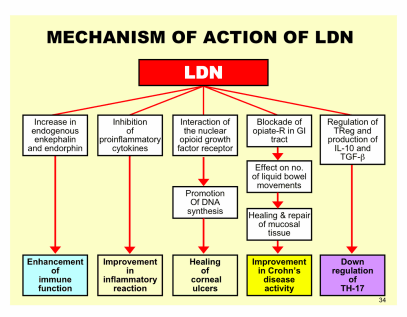
Low Dose Naltrexone (LDN) is a drug which has been shown to boost immune function and decrease inflammation, thereby serving as an adjunctive treatment for an array of cancers, central nervous system disorders, autoimmune diseases, and several other issues and chronic disease states. Originally, Naltrexone was prescribed and FDA approved in higher doses of 50 mg to 300 mg to treat opioid and alcohol addiction; doses of 1.0-4.5mg are considered low dose and have both opioid agonist and antagonistic affects.
The objectives of this evidence based lecture were:
- Review opioid receptor function
- Review of Naltrexone
- Introduction of Low Dose Naltrexone (LDN)
- Mechanism of Action of LDN-cellular science
- Explore studies of LDN use
- Review how to prescribe LDN
- Personal clinical Experience with LDN
This presentation was well attended, over 50 attendees, and very well received based on post lecture feedback to the program director. I would highly recommend any practitioner treating chronic disease states, specifically chronic pain and auto-immune states, to investigate and consider LDN as a treatment alternative.
From a DNP perspective, this research and development of content with subsequent presentation meet the DNP Essentials: I. Scientific Underpinnings for Practice; III. Clinical Scholarship and Analytical Methods for Evidenced-Based Practice; VII. Clinical Prevention and Population Health for Improving the Nation’s Health; and VIII. Advanced Nursing Practice.
IFM Lectures Food/Genetics/Epigenetics:
February 14, 2018
The Institute for Functional Medicine (IFM) has by far some of the best evidence based, integrated and holistic approaches to disease lectures I have found. The series of lectures I took part in spoke to delving into genetics as a root cause and treatment alternative of many chronic disease states, from the genetic modification of food, to our own DNA structure and gut microbiome; genetic testing and interpretation, and using genetic testing to ore precisely prescribe. Approach the psychology of food was another interesting way to look at, assess and treat obesity and food addictions.
Lectures virtually attended via IFM were:
- Systems Medicine: Facing Personalized and Public Healthcare Challenges in a Changing and Dangerous World
- A Conversation on the Genomic Revolution/Evolution
- Eating Psychology Meets Functional Medicine: A Clinical and Soulful Approach
- Epigenetics, Genomic Imprinting, and the Effect of Nutrition
- Food “Technologies” and the Evolution of Disease
- Genome Meets Microbiome
- Human Social Genomics: Recent Findings and Clinical Implications
- Pharmacogenomics and the Changing Face of Medicine
- The Biological Addiction of Food
Continuing education lectures like these and others in the realm of integrated and functional approaches to health and healing through IFM can be found at:
https://www.ifm.org/learning-center/
I truly enjoyed my time being a part of these lectures and learning from the speakers. As a speaker and APRN who loves research, the time spent and things I learned will directly impact my future role as a doctoral prepared APRN. I would highly recommend these activities/lectures to any DNP colleague.
From a DNP perspective, these trainings meet the DNP Essentials: I. Scientific Underpinnings for Practice; III. Clinical Scholarship and Analytical Methods for Evidence-Based Practice; IV. Information Systems/Technology and Patient Care Technology for the Improvement and Transformation of Health Care.
Team conference call with CEO of NAVA Health & Wellness Centers
February 20, 2018
Bernie Dancel is a business leader, entrepreneur and change agent whose current focus is on bringing prevention and wellness treatments to the mainstream public, opening awareness and accessibility to all markets, not just the elite markets. Currently running four successful vitality centers, Bernie is preparing a prospectus for investors to take the clinics national. Bernie’s prior companies have been listed on Fortune’s Tope Places to Work in America.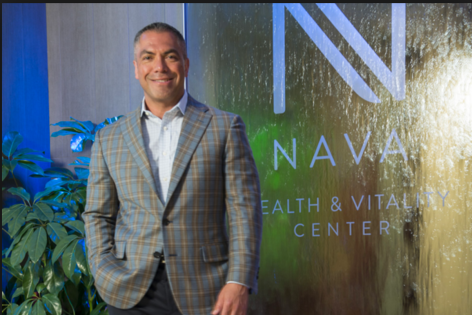
The intention of my time with Mr. Dancel was to glean a greater understanding of the process of mergers, acquisitions and expansion of medical clinics through investors and financial partners. A fascinating morning was spent dialoging via a virtual conference and listening in to the team members “due diligence” inquiry into expansion of their enterprise. Topics of discussion ranged from company financials, staffing, products, services, profitability and future goals.
From a DNP perspective, this meeting meets the DNP Essential II. Organizational and Systems Leadership for Quality Improvement and Systems Thinking. As the healthcare industry is rapidly morphing into more and more business structures, with mergers, acquisitions and buy-outs of major medical practices and health systems, I would highly recommend a fellow DNP colleague to spend time with a CEO of a cash-practice medical model/ venture capitalist firm.
Third Tau Consulting
February 28, 2018
The time spent with the CEO of Third Tau Consulting group, Brian Hanson, was via a virtual online conference. Third Tau is a consulting company who collaborates with companies to develop online training platforms and integration of products, services and people utilizing advanced technology. Specifically, the online training platforms are created by interviewing each member of the team involved in the teaching or training process; in the case of the medical online training platform, the speakers and trainers review content and strategize with the developers to create a robust and measurable product. The recommended layout of online training platforms follows a pre-test-short lecture-post-test format with gaming aspects to keep the learner engaged.
The time spent understanding this type of system was fascinating. What I loved the most was the creative ways to keep the learner engaged. Having been a part of many online medical training s and continuing education courses, the interactive creative nature of this type of training was unlike anything I had seen and very attractive as a learner and teacher/trainer. I would highly recommend any DNP involved in creating virtual trainings for medical or clinical learning to explore this type of platform.
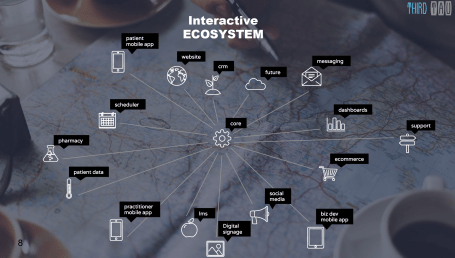 From a DNP perspective, this training meets the DNP Essentials: II. Organizational and Systems Leadership for Quality Improvement and Systems Thinking; IV. Information Systems/Technology and Patient Care Technology for the Improvement and Transformation of Health Care.
Innovation through Education, Research and Evidence-Based Practice
March 9, 2018
This research symposium exposed me to the research presentations and presentation process of PhD students and their faculty from a variety of disciplines beyond nursing. Poster presentations were displayed from both PhD and DNP students, and some faculty. There were two time frames where attendees had an opportunity to speak with the presenters at the poster presentation forum. I had the opportunity to see the work of some of my former DNP student colleagues, which was helpful for my own poster presentation development, as well as engage in dialogue with other PhD students about their work. I think the time spent at this forum was well spent and I would recommend this activity to any DNP of DNP student looking to expand their knowledge base in the research arena.
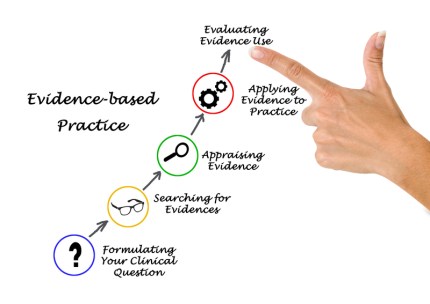
From a DNP perspective, this activity meets the DNP Essentials: I. Scientific Underpinnings for Practice; III: Clinical Scholarship and Analytical Methods for Evidence-Based Practice; VI. Interprofessional Collaboration for Improving Patient and Population Health Outcomes.
PAX- Partnership, Accountability & Collaboration in Relationships Workshop
April 6-7, 2018
This 2-day workshop was an interactive, hands-on training on essentials of key communication skills with patients and peers through listening to learn techniques, intention setting and recognition of personal bias in conversations. Focused on enhanced effective communication, which can be utilized between providers and patients, providers and staff and peers, the time spent at this workshop gave me tangible tools to implement immediately with every interpersonal relationship and interaction. I believe effective communication skills and being able to link concepts from listening to learn are some key components of systems thinking. Having the ability to hear what is not being said to discern what the underlying components of a thought, action or behavior are paramount to organized leadership and may directly impact clinical outcomes.
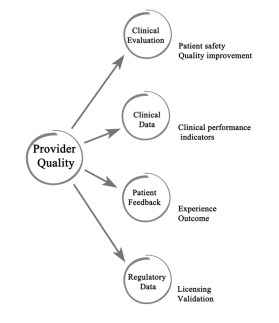
I highly recommend this activity to anyone who is a position where advanced communication and listening techniques would benefit; organizational leaders, managers, and healthcare providers all could benefit from the tools gleaned from this workshop.
From a DNP perspective, this activity meets the DNP Essentials: II. Organizational and Systems Leadership for Quality Improvement and Systems Thinking; V. Health Care Policy for advocacy in Health Care; VI. Interprofessional Collaboration for Improving Patient and Population Health Outcomes.
TNA Policy Summit & House of Delegates
April 13-14, 2018
The two days spent immersed in TNA policy and updates was a highlight of this semester for me. I had not previously delved much into the policy side of nursing until now, and became very interested in the process during my time these 2 days. Day one was especially interesting as I was able to participate in breakout sessions focused on brainstorming ideas related to the key issues: Education, Workplace Advocacy, Regulation, End of Life Issues, Maternal Morbidity & Mortality, and Mental Health.
I also learned a great deal about the structure of the organization as well as the leaders and committee chair persons.
Day two was spent learning about the delegate process, the focus of different districts as well as voting process of new delegates and as a proxy for my district voting on policy issues. I was able to network with members of my district as well as some surrounding districts and glean a better understanding of issues on those districts and district focus. I would highly recommend this activity to any RN or APRN.
From a DNP perspective, this activity meets the DNP Essential III: Clinical Scholarship and Analytical Methods for Evidence-Based Practice.
Age Management Medicine Group: Clinical Applications for Age Management Medicine
April 26-29, 2018
The time spent at the AMMG conference was incredible. Each day presented new opportunities to expand my clinical and critical thinking skills beyond the obvious physical symptom presentation a patient may present with. From the neuro-cognitive, cardiovascular, gastro-intestinal and endocrine systems to the personal, social, emotional, spiritual and community, this program delivered tools, both tangible and conceptually, to help me create a more well-rounded assessment and treatment plan for my future patients. With the focus of my clinics on prevention and optimal health, a Healthy People 2020 goal, this program and the knowledge and skills acquired will serve this goal in a variety of ways. I would highly recommend this training to my DNP colleagues.
From a DNP perspective, this training meets the DNP Essentials: I. Scientific Underpinnings for Practice & Essential; Essential III. Clinical Scholarship and Analytical Methods for Evidence-Based Practice; and VIII. Advanced Nursing Practice.
From a DNP perspective, this activity meets the DNP Essential: VI. Interprofessional Collaboration for Improving Patient and Population Health Outcomes
AANP Best Practices in the Care of the Menopausal Client Manuscript Edits
April 30, 201
This manuscript was the finished product of a year of work on a presentation with AANP on a research grant from Pfizer. The intention of the grant was to update providers on the facts surround the Women’s Health Initiative (WHI) and current best practices for women going through the menopause transition. The objectives of the work were:
- Identify key conclusions of the preliminary and subsequent findings of the WHI as reported by the Principal Investigators of the study.
- Describe reporting components from the WHI conclusions that factored into misinterpretations into the analysis of risks and benefits associated with use of hormone therapy in postmenopausal women.
- Discuss the short- and long-term consequences to menopausal women, especially in younger women who are likely to be more symptomatic, if clinicians do not explore the severity of menopausal transition in their aging female patients.
- Discuss evidence-based hormone therapy guidelines issued from renowned health organizations for treatment and management of various symptoms and comorbidities associated with menopausal transition.
- Apply risk benefits to the clinical case studies presented to determine best practice decisions in recommending pharmacological vs non-pharmacological therapeutic options for management of menopausal transition.
The continuing education is ongoing until December 2018 and can be found at:
https://aanp.inreachce.com/Details?groupId=573169D8-149C-42E0-B3FC-185383C1D100
The manuscript focus is taking the information presented in the presentation down to a manageable size 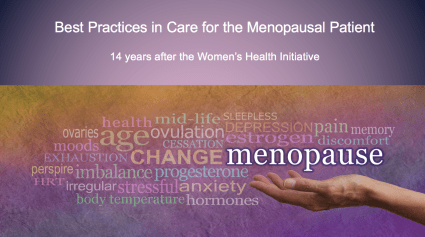 and submit to the JAANP for publishing. Final edits made late this spring will be reviewed by the medical writer prior to submission for publishing. This activity was an incredible experience and I was very honored to be a part of it. I would highly recommend any RN or APNR to partake in the process of presenting at national conferences, creating poster presentations and collaborating with medical writers to get their knowledge disseminated into the filed. Not only is it highly rewarding but may benefit others within and beyond the profession, as well as the patients they serve.
From a DNP perspective, this research and development of content with subsequent presentation meet the DNP Essentials: I. Scientific Underpinnings for Practice; III. Clinical Scholarship and Analytical Methods for Evidenced-Based Practice; VII. Clinical Prevention and Population Health for Improving the Nation’s Health; and VIII. Advanced Nursing Practice.
 Androgen Hormone Therapy for Women